
End-of-life paperwork isn't the problem (that's why you're still stuck)
TL;DR:
If your end-of-life paperwork is still sitting in a folder somewhere, the form isn't what's stopping you.
Most people stall because they haven't actually decided what they want at the values level, not the checkbox level.
Get clear on that first and the paperwork takes minutes, not years.
This post breaks down what's actually in an advance directive, what it costs the people you love when it's missing, and how to get unstuck.
Let me guess: you've been telling yourself you "just" need to do the end-of-life paperwork
Fill out the forms. Call the attorney. Get the documents filed.
But if that were true, you'd have done it by now.
You're smart. You're organized. You finish things. And yet that folder — the one with the half-started advance directive and the link to a state PDF you opened once and immediately closed — is still sitting there. Untouched. Mocking you a little.
So what's actually going on?
What's behind end-of-life paperwork procrastination
Most people who are stuck aren't stuck on the form. They're stuck because they don't know what they want. Not really. Not in the specific, values-level, what-does-a-good-death-look-like-for-me way that makes the paperwork mean something.
A national poll of adults age 50 to 80 found that most people without a completed advance directive say the same thing when asked why: they just haven't gotten around to it. Not that they don't believe in it. Not that it's too expensive. They simply haven't sat down and done it. And researchers studying why people put off advance care planning keep finding the same root cause underneath the procrastination — discomfort and confusion about the conversation itself, way more than anything logistical.
No form, no attorney, no online checklist can hand you that clarity. That part has to come first. And almost no one is helping people with that part.
That's part of why roughly one in three US adults has actually completed any kind of advance directive, despite how often the topic comes up at the doctor's office, in estate planning conversations, in articles exactly like this one. It's not a knowledge problem. People generally know these forms exist. It's that knowing a form exists and knowing what you'd actually want it to say are two completely different things.
This is the same pattern I see in clients who've planned for everything except this. The real problem was never the missing document. It's the gap between the intentional life they built and the end-of-life they haven't prepared for. That gap is what generates the quiet dread. Not the PDF.
The paperwork can take 45 minutes
Jason came to me a few months after a pretty serious health scare. Late 50s. Senior partner at a consulting firm. The kind of person who had a financial advisor, an estate plan, and a Google Drive folder for everything. On paper, he had his life extremely together.
But he hadn't touched his advance directive in years. And it only ever covered the basics.
He knew it. His wife knew it. Neither of them brought it up because... where do you even start?
He told me he'd tried three times to just "sit down and do it." Each time, he got about 10 minutes in, hit a question about life support or feeding tubes, and felt a wave of something he couldn't name. Not fear exactly. More like: I genuinely don't know what that means or what I want.
So he'd close the laptop. Tell himself he'd come back to it. And he didn't.
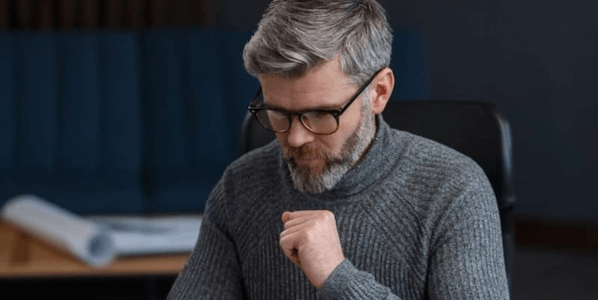
When Jason and I started working together, we talked first about what mattered to him. What "enough" looked like. What quality of life meant for him. What he wanted the people he loved to experience on his behalf, and what he absolutely didn't want them carrying.
By the time we got to the actual documents, he wasn't guessing. He knew.
The paperwork, as he put it, "took about 45 minutes and felt like nothing." The thing that had sat in his 3am thoughts for two years was done. The forms didn't get easier. He got clear on what mattered to him. And the conversation with his wife afterward, he told me, was the most honest they'd had in years. Not heavier — lighter.
What's in your end-of-life paperwork (and why it's less scary than you think)
An advance directive is usually two documents, not a mysterious legal maze. According to the National Institute on Aging, the two most common pieces are:
A living will, which spells out which treatments you'd want and which ones you'd want to avoid, and
A durable power of attorney for health care, which names the person who can make decisions for you if you can't speak for yourself.
That's it. Two pieces. Not a binder.
Most states offer the living will and power of attorney forms free, and you generally don't need a lawyer to complete them — though one can help if your situation is complicated. What you do need is to already know your answers before you sit down with the form, because the form will not figure that out for you.
This is exactly where most people get stuck — not on the legal language, but on questions they've never actually sat with. Which is the whole point of doing the values work first.
Knowing what you want isn't the same as it being legally honored
There's a real gap between "my partner knows what I'd want" and "my partner can legally speak for me in a medical crisis." That gap is not hypothetical, whether you've been married for decades or your closest relationships aren't biological family.
A solid verbal agreement means everyone understands the plan and everyone has good intentions. But the moment something goes sideways, what matters is what's on paper. Research on surrogate decision-making backs this up directly — at least a third of the people put in the position of deciding for someone else carry real, lasting guilt and stress over whether they got it right. For some, that burden doesn't fade for months. Or years.
Your people don't deserve to guess. They deserve the paper.

The real cost — what your avoidance costs the people who love you
Here's the part that doesn't get said enough: the cost of staying stuck isn't yours alone to carry. It lands on whoever ends up standing in a hospital hallway, making a decision about you, with no idea whether they're getting it right.
That's not a small thing to hand someone. It's stress now and doubt for years afterward, according to the same surrogate research above. And it's avoidable. Completely.
Studies on advance care planning consistently show lower stress, anxiety, and depression in the family members of people who actually documented their wishes ahead of time. Not because the form is magic. Because nobody had to guess.
Why the values conversation has to come before the forms
Most planning tools start with medical scenarios and ask you to react. But your reaction to a hypothetical feeding tube question means something different depending on what you value.
Independence?
Being present for your people?
Not being a burden?
Quality over quantity?
The answers to those questions determine the answers on the form. Without them, you're just guessing.
Getting unstuck — what actually moves your end-of-life paperwork from stuck to done
So if the paperwork was never really the problem, what do you actually do?
You start with the values conversation, not the form. That's the entire premise behind a Blueprint Session — it's a strategy session built to remove the "where do I even begin" paralysis and hand you an actual roadmap. Not a worksheet you'll abandon. A starting point that's specific to you, with a follow-up call a week later to check on progress.
From there, an Advance Care Planning Essentials session is where the documents actually get completed correctly — state-specific directives, properly executed, alongside the conversation that makes them mean something. That's the order that works. Clarity, then the form. Not the other way around.
You don't need to figure out your entire end of life plan in one sitting. You need the next right step, and a guide who's done this with enough people to know which questions actually matter and which ones can wait.
Jason didn't need a better PDF. He needed to know what he wanted. Once he did, the PDF took 45 minutes.
The paperwork was never the hard part
The paperwork, once you know what you want and why, is almost anticlimactic. The guided conversation that gets you to clarity before you ever pick up a pen is what unlocks everything else.
A few things to take from this:
Your end of life wishes start as a values question, not a legal one.
The people you love deserve documentation, not a guess.
The version of this that takes 45 minutes is on the other side of a conversation you haven't had yet, not on the other side of a better form.
If any of this resonated, book a free Readiness Review Call and let's talk through where you actually stand. Or start with the free email course on what a good death actually looks like — it walks you through the values work at your own pace, no appointment required.
Frequently asked questions
Why do I keep avoiding my end-of-life paperwork even though I know it matters?
Because the form isn't actually what's stopping you. Most people stall because they haven't worked out their own values around quality of life, intervention, and what they want for the people left making decisions. The avoidance is about clarity, not logistics.
What documents actually make up "end-of-life paperwork"?
Most commonly, two: a living will, which states the treatments you would or wouldn't want, and a durable power of attorney for health care, which names who can decide on your behalf if you can't. Some states bundle these into a single advance directive form.
Do I need a lawyer to complete an advance directive?
Generally, no. Most states provide free forms, and a lawyer isn't required to make them legally valid. A lawyer can be useful if your situation is complex, but the values clarity has to happen either way, and that part isn't a legal task.
What actually happens to my family if I don't have this done?
Someone close to you ends up making decisions on your behalf without knowing for certain what you'd want. Research on surrogate decision-making shows that burden — guilt, doubt, ongoing stress — is real and can last for years. It's avoidable with documentation done ahead of time.
How is this different from working with an estate attorney?
An estate attorney handles the legal and financial structure. A death doula focused on advance care planning works on the values conversation and the practical, human side — helping you figure out what you want and walking you through getting it properly documented, without providing legal, medical, or financial advice. We help connect the dots between healthcare, legal, and financial — to make sure you're covered.