
What is a death doula? A complete guide
TL;DR:
A death doula — also called an end-of-life doula — isn't just someone who sits at a bedside in someone's final days.
This role spans four phases: advance care planning (years before anyone's sick), end-of-life support (during decline), life and legacy projects (before, during, or after a death), and grief support.
A huge amount of the work supports the people around the dying person, not just the dying person themselves.
Less hospice add-on, more human bridge across a fragmented system.
I built this practice around the role I needed and didn't know existed — for my sister, and for myself.
I didn't know this role existed until Anderson almost quit his job for it
Anderson Cooper told Tig Notaro what death doulas do is extraordinary, and that he'd seriously considered giving up his career to become one himself. They joked about starting a death doula business together — "I'll do it if you do it," he told her.
But underneath, it wasn't a joke.
And it stopped me in my tracks. By then, I'd already spent 20 years living through exactly the gap that role exists to close. I just didn't have a word for it.
My sister had a fatal brain disease. It took her slowly, over two decades. What I needed during that time wasn't just someone to help advocate for her — it was someone to help me. Someone to:
Translate a medical system that never once seemed built to make any of this easier.
Help our family hold together when everyone was exhausted, scared, and saying things they didn't mean.
Walk me through the dying process.
Ask me, at some point along the way, things like if I wanted to record her laugh while I still could.
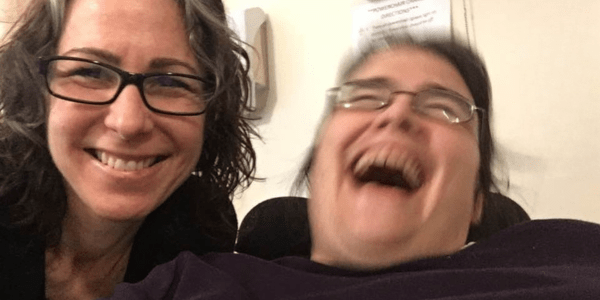
Nobody told me any of this had a name. So when I finally heard that it did, I didn't just want to learn about it. I decided to become it — for other families living through the version of this I lived through, without anyone telling them what they were allowed to (or should) ask for.
That's the lens I want you to read the rest of this through. Because one of the biggest misconception about this work isn't about timing... it's about who it's for.
People hear "death doula" and picture someone holding a dying person's hand in their final hours. That's part of it. It's not most of it.
By the time most people think to call a death doula, they're already in crisis. A parent's diagnosis just received. A sibling is asking what Dad would have wanted, and nobody actually knows. The paperwork that was supposed to get done years ago... still isn't done.
That's the gap a death doula is built to close — not just at the bedside, but years before it, in the slow stretch of life when nothing feels urgent yet.
The work covers advance care planning, the dying process itself, and the legacy work that can happen before, during, or after a death. Same relationship, same person, three very different moments.
What is a death doula (also known as an end-of-life doula)?
A death doula is a trained, non-medical companion who supports someone and their family through the end of life — not just the final days, but the planning, the decline, and what comes after. Think guide and translator, not medical provider.
INELDA, one of the larger doula training organizations, describes the role as a non-medical companion who helps people and their circles of care navigate death, loss, and mortality with whatever support actually fits their situation. That's deliberately broad, because the day-to-day work varies a lot.
Some doulas lean hard into the planning side.
Some spend most of their time at the bedside.
Some are mostly doing legacy work.
There's no single template, and no licensing body that says otherwise.
"Death doula" and "end-of-life doula" mean the same thing — you'll see both used interchangeably, sometimes in the same sentence. Pick whichever one feels less strange to say out loud. I won't judge you for it.
The biggest misconception: It's not just about the final weeks — or just about the dying person
Here's where most people get it wrong: they assume the role gets called in once hospice is already involved. Once someone's actively dying.
That's one moment a doula might show up. It's far from the only one.
According to CaringInfo, a program of the National Alliance for Care at Home, a death doula can begin working with someone at any point in the process — there's no single "right time" to start. Some clients call years before anything's wrong, simply because they want their planning handled by someone who's done this hundreds of times, not by a frantic Google search at 11pm.
Which is, honestly, the better time to call. Less crisis. More clarity. And a lot fewer decisions made while everyone's exhausted and scared.
There's a second misconception underneath that one, and it runs just as deep.
People assume this work is only for the person who's dying. It's not.
A huge amount of it is for the people around them — the ones navigating a medical system that doesn't seem designed to make any of this easier, the ones trying to hold a family together while everyone is running on no sleep and saying things they don't mean.
I needed that as much as my sister did, for two decades. I just didn't know there was a name for what I needed.
The four phases of death doula support
The work generally falls into four phases. They can happen years apart, or all within a few months of each other. Some clients only need one phase. Plenty need all four — just not at the same time.
Advance care planning: The work that happens years before
This is the part most people skip until they're forced into it.
Advance care planning means documenting what you want if you can't speak for yourself. Which treatments you want. Who decides for you. What quality of life actually means to you, specifically.
It's not a form you fill out once and shove in a drawer — it's a real conversation, revisited as your life changes, because the person you were at 35 often wants different things than the person you are at 55 or at 75.
This is where most of advance care planning work lives, and it's the piece that prevents nearly everything else from turning into a crisis later.
End-of-life support: Presence when it matters most
Once someone's actually in decline, the shape of the work changes.
Doula and breast cancer survivor Diane Button, speaking with PBS, describes how her focus shifts as death gets closer — moving from legacy work toward offering respite for exhausted family members and working through the practical pieces. Who they want in the room. How to make the dying person comfortable.
A lot of this phase is translation. Explaining:
What hospice is actually telling the family
What a symptom means and whether it's urgent
What's normal, and what's worth a call to the nurse at 3am
The stages of the dying process
End-of-life support is reactive by nature, but it doesn't have to feel like flying blind.
And it would have helped me...
I wasn't in the room when my sister died, because no one told me how close she actually was. The only signal I got was a cart of coffee and snacks, wheeled in that morning with no explanation. I learned afterward that's what they do when they expect someone to die soon. I wish someone had told me.
A death doula would have had the time and the presence to do so.
Life and legacy projects: Capturing who someone is
This is the part people are most surprised to learn doesn't have to wait until someone's actively dying.
That same PBS piece notes that doulas often help dying people work on legacy projects, exploring how they want to be remembered, and that work can start while someone still has months, even years, ahead of them. Letters to specific people. Recorded interviews. An ethical will — a document that passes down values and stories instead of property.
A scoping review published in the journal Palliative & Supportive Care found real benefit in this kind of work: a sense of completion that goes beyond sentimentality. It does something for the person doing it, not just the family keeping it.
I think about this a lot, because there's one thing of my sister's I really, really wish I had. She was known for her laugh. Genuinely known for it — the kind of thing people brought up when they talked about her. I don't have a recording of it. Not audio, not video.
It wasn't on my radar to think about capturing it, because I was busy with the stress, anticipatory grief, and all the other things that come with losing a loved one... the more "fun" things I would treasure later were not on my mind I wish someone had suggested it was something worth doing, or that the window for doing it would close without warning.
So I make sure others don't lose the opportunity. And there's way more you can do than people realize, and none of it requires special equipment or training.
Life and legacy projects can be:
A recorded interview
Letters written for specific people to open later
A photo collection narrated in someone's own words
Those never-ending Dad jokes, captured so they live on
A family recipe collection, written down before it disappears with the person who carried it
None of it is complicated. All of it requires someone to actually suggest it before the window closes — which is exactly the job.
And it doesn't have to happen before death, either. Plenty of families come to life and legacy projects mid-grief, piecing together who someone was from what they left behind. I didn't get the chance to do this work proactively with my sister. I get to make sure other families don't lose what I lost.
Grief support
Grief can start before a loved one dies, often extends far beyond it, and involves the loved one of the dying person.
This is an important key to death doula work... it's providing support for the patient AND their loved ones.
Anticipatory grief can catch people by surprise, as can the common expectation that you'll "move on" (quickly) after a loved one dies. I lived inside anticipatory grief for the better part of twenty years and didn't have a name for that either — I just thought it was what loving someone through a long decline felt like. It has a name. It deserves support of its own, separate from whatever comes after. Doulas can help you work through both.

Why advance care planning improves your life, not just your death
Advance care planning isn't really about avoiding a bad death. It measurably reduces stress, anxiety, and depression for the family members left making decisions, and the data on this is specific, not vague.
Research cited by ACP Decisions found that advance care planning improves the bereavement experience of families, reducing stress, anxiety, and depression after a loved one's death. That's the difference between grieving and grieving while also drowning in guesswork.
The flip side is worse than most people realize.
A study referenced by Medical Economics found that people who'd had advance care planning conversations were more than two and a half times as likely to have their wishes actually known and honored.
And in the ICU specifically, research on caregiver strain found that up to 80% of family members who share in end-of-life decisions without that guidance develop moderate to severe post-traumatic stress.
80%. That's not the outlier. That's most families.
So this isn't planning for your death. It's protecting the people who'll be standing in a hospital hallway making a decision about you, at 2am, with no idea what you'd have actually wanted.
Why so many capable people wait anyway
My clients are not disorganized people. Quite the opposite, usually.
Pew Research data shows that almost half of adults between 40 and 59 are caught in what's called the sandwich generation — caring for aging parents, raising their own kids, and running a demanding career, sometimes all in the same week. About a third report feeling constantly pressed for time.

These are people who've built a whole life on intentional decisions. Retirement accounts, mapped out. College funds, funded. And then this one piece — the actual end of their own life — sits untouched. Not because they don't care. Because it's never the thing that's on fire today.
Until it is the thing that's on fire. And then it's a crisis instead of a conversation you had time to think through.
How a death doula differs from hospice, a lawyer, or financial advisor
A death doula isn't medical, legal, or financial. That's hospice, an attorney, and a financial planner. This is the educator and translator who sits between all three and the family, making sure nothing falls through the cracks.
I get asked about this all the time, so let's be direct.
Specifically, I don't provide medical advice or hands-on caregiving. I'm not a lawyer, and I don't give legal advice. I'm not a financial advisor. I don't fill out your forms, and I don't notarize anything.
What I actually do is translate. Doctors speak in clinical terms. An attorney speaks in legal terms. Financial advisors are all about the money.
None one is sitting with you...
Asking what actually matters; or
Noticing that your healthcare directive and your family's expectations don't line up; or
Seeing that some family are shutting down from the stress, and working to re-engage and help them.
That gap — between the expertise that's out there and the human trying to make sense of it — is where this role exists.
The death doula as project manager: Bridging a fragmented system
There's real research behind why this role exists at all, and it's not just a trend.
A systematic review of the death doula role points to fragmentation in palliative care as a genuine, global problem — current health and social care systems don't consistently meet the needs of the dying, and families end up filling the gaps themselves.
Picture it. Doctors speaking clinical. Attorneys speaking legal. Hospice arriving later than anyone expected. Nobody connecting the part where someone says what they actually want to the part where that gets carried out.
I think of myself as part service provider and part project manager for someone's end of life. I'm not managing their feelings or their decisions for them... I'm managing the connections between everything else that's already out there, so the family isn't stitching it together at 2am with no instructions.
A death doula isn't a hospice add-on, and it isn't a last-resort hire. It's a relationship that can start years before anyone's sick and keep going long after someone's gone — covering the planning, the dying, and the legacy that gets left behind.
It's also, for what it's worth, the role I spent 20 years needing and didn't know existed. I'm not saying that to make this sound like a calling instead of a job — it's both. I became the person I wish had been there for my sister, and for me. If you're already living some version of what I lived, you don't have to wait 20 years to find out there's a name for it.
If you're the person in your family who already knows this is unfinished, start with the free Readiness Review Call. Twenty minutes, no homework, just an honest look at where things actually stand.
And if you're not ready for a call yet, the free email course What a 'Good Death' Actually Looks Like (and How to Design Yours) walks through the same ground, at your own pace.
Whatever works. Just don't wait for the crisis to make the conversation urgent.
Frequently asked questions
What's the difference between a death doula and hospice?
Hospice provides medical care: pain management, nursing visits, and a clinical team focused on comfort. A death doula provides non-medical support — emotional, practical, and educational — and typically works alongside hospice rather than instead of it. Neither role replaces the other.
Is "death doula" the same thing as "end-of-life doula"?
Yes. The terms are used interchangeably, and you'll also hear "death midwife" or "end-of-life coach" for the same role. There's no single certifying body controlling the title, so practitioners may describe themselves slightly differently while doing very similar work.
When should I hire a death doula?
Any time. Advance care planning works best done early, years before a health crisis, while you're clear-headed and have time to think things through. End-of-life support comes into play during active decline. Legacy projects can happen before, during, or after a death — there's no wrong entry point.
Does insurance cover a death doula?
No. Insurance typically doesn't cover this kind of support — Medicare doesn't reimburse for it, and private insurers generally don't either. Some doulas offer sliding-scale pricing, and fees vary depending on what's involved.
What's a life and legacy project, exactly?
It's a guided way of capturing someone's story, values, and voice in a lasting format — letters, recorded interviews, an ethical will, even a recipe collection. It can be created proactively, while someone is healthy, during a decline, or by a grieving family after a death.